

Why Choose Us?
Advanced Equipment
Our Factory is well equipped with all worldclass facilities, such as programmable tensile load testers, crimping systems with acoustic emission detectors, fully automated rubber injection moulding machines, vulcanization testers, a complete set of power frequency transformers and impulse voltage generators.
Wide Product Range
Main products include composite insulators for electric power lines from 10 to 800kV, composite insulators for electric railways, phase spacers, disconnecting switches, bushings, surge arrestors, etc. Our products have a good reputation in international markets.
Complete Qualifications
We implemented the ISO 9001:2015 Quality Control and the ISO14001:2015 environmental management systems. DCI's management and comprehensiv ecompetitiveness, quality of products and services, benefited enormously.
Broad Market
DCI's products have been exported to Europe, America, Oceania, Africa and Asia. We also have long-term cooperation with a lot of large international electricity companies like TYCO, ABB, AREVA, ALSTOM, PLP, Victor, EB, NTP and Siemens.
What is Guy Wire Fittings?
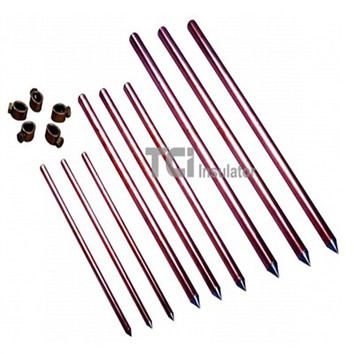
Guy wire fittings, Guy wire is designed to use with several fittings and components for different applications, and they are used together to provide stability to towers, antennas, and other utility structures.


Benefits of Using Guy Wire Fittings
The extra strength and stability provided by guy wire fittings enable the construction of towers hundreds of feet high. Permanent guy strands keep towers and poles upright against many forces. Some forces include high winds or the forces of power lines that can add weight to the sides of poles they run between.
Construction of Guy Wire Fittings
The guy wire can be divided into various divisions that help to describe the best guy wire. These are as discussed below. Other features of a good guy wire state that it should be lightweight, have good design, have a little stretch, should be durable and have high break strengths to withstand great tension.
Material
The materials used to make the guy wires are important in assisting them to be durable by resisting different weather conditions. The materials should be pure and quality steel and should be coated by zinc.
01
Strandin
The wire strands should be covered in the wires known as 7-wire of 19-wire strands.
02
Tension and design
The guy wire should have a high tensile strength that helps it to prevent breaking and be resistant to all weather conditions that allow it to increase the service life of the guy wire.
03
Weight of the coatin
The guy wires should be coated in zinc per ASTM A475 standard, and the weight is determined by the evaluation based the various test methods.
04
Finish
The zinc-coated wire is free of flaws that are not in consistent with industrial standards. The zinc coating is constant and of reasonably uniform thickness.
05
Considerations Before Guy Wire Fittings Installation
The installation for guy wire requires numerous steps and safety considerations. These processes include precautions to ensure the actual installation process happens smoothly. Every professional should pay attention to specific guidelines so they install the guy wire correctly. Some core considerations to make before a guy wire installation takes place include
Weather
Don't schedule a guy wire installation on a wet or windy day or when an electrical storm is on the horizon. These weather conditions make guy wire installation more challenging, presenting safety concerns for installers. Those working on the project should reschedule immediately if a storm surfaces suddenly.
Site location
Assess the surroundings of the installation. Take note of any electrical wires in the area that may present an electrical safety concern, along with any geographical features, such as surrounding buildings or landscape features, that may impede the installation. Additionally, determine the soil type at the installation site to determine the best anchor system.
Pole class
Consider the class of the pole where you're adding guy line anchors. This pole must be an adequate size to avoid buckling under tension. It's also important to know that information to determine the type of guy wires required for the application.
The number of guy sets
Be sure to think about how many guy sets you need for the installation, as taller structures will often require more guy sets.
Local regulations
Remember to consult local city planning officers before beginning an installation. Rules differ on local, state and country levels, so it's essential to ensure your installation obeys the area's standards.
Quality installers
A professional should always install guy wire. These individuals have the experience and tools needed to ensure proper installation. Otherwise, safety risks will arise. These factors should be present before, during and after all guy wire installations to ensure proper and safe processes.

Guy wires are installed on poles to help support the pole and the weight of lines and other equipment installed on the pole. Workers are exposed to electrical hazards if there is a potential for a guy wire to contact an energized line, for example, when:
• Installing a new guy wire on a pole with energized lines
• Adjusting the tension to remove slack from a guy wire
• Replacing a guy wire after an incident or natural disaster
To protect employees, guy wires must be either effectively grounded or have properly positioned insulators to block the flow of electric current so that employees on the ground are protected.
How Strong Are Guy Wire Fittings?
|
Size |
Strand |
Breaking Strength |
|
1/2″ |
1×7 |
26,400 lbs. |
|
9/16″ |
1×7 |
35,000 lbs. |
|
5/8″ |
1×19 |
42,400 lbs. |
|
3/4″ |
1×19 |
58,300 lbs. |
What is Tension Clamps?
The tension clamp is one kind of exclusive tension hardware fittings, it is mostly used on the overhead transmission lines or distribution lines. The tension clamp is also named a dead end strain clamp or quadrant strain clamp, it is one kind of conduction line clamp. Because the nature of the tension clamp is like a guy, some customers call it guy category or bolt type.
Benefits of Using Tension Clamps
The role of tension clamps is to securely fasten the wire to the supports. They must be installed at the beginning and end of the track, as well as at turns. They are also used along a straight section, where there is a large tensile load on the wire, where there is a difference in the heights of the attachment points, and so on.
The main advantages these clamps are:
● Excellent strength;
● They are small in size;
● Easy to operate;
● Fast installation of lines.

Where Tension Clamps Are Used
Suspended overhead lines running between poles, buildings, and other supports are secured with anchor clips.
They secure wires at the beginning and end of cable routes, sudden changes in direction, line turns, and where there is a difference in height between poles.
Areas of application of tension clamps:
– Fastening of cables in high-voltage lines;
– Installation of overhead cip wires between multi-story buildings to provide user communications;
– Introducing wires into administrative buildings;
– Electrical laying of wires in industrial enterprises, etc.
In the event of loads exceeding the permissible values, the clamps may collapse, but the supports remain intact.
Key Components of Tension Clamps
Main Body Structure
The main body structure of a tension clamp is typically crafted from high-strength materials like aluminum or steel to bear mechanical loads effectively. This main body must be both robust and lightweight to facilitate easy installation and longevity in service. The design also includes features that distribute the load evenly, preventing damage to the conductor and ensuring long-term reliability.
Insulating Elements
For applications where electrical insulation is crucial, tension clamps are equipped with insulating elements made from high-quality polymers or rubber. These insulators prevent electrical discharge and arc-over, which is critical for maintaining the safety and efficiency of the electrical system. The insulating elements must be durable to withstand environmental stresses such as UV light, moisture, and temperature fluctuations.
Connectors and Bolts
Connectors and bolts are essential components of any tension clamp, ensuring secure attachment to the conductor and supporting structures. These elements are often made from corrosion-resistant materials such as galvanized steel or brass, ensuring longevity and reliability. Precision engineering of these parts is vital for maintaining the tension and proper alignment of conductors.
Installation Method for Preformed Tension Clamps
Installing a preformed tension clamp involves several steps to ensure a strong and secure connection. Manufacturers often provide product specifications, which may include detailed installation requirements. Essential tools for installation include preformed tension clamps, insulators, conductors, pliers, torque wrenches, and safety gear. The following is a complete guide to installing preformed tension clamps in overhead transmission lines
Preparation
Ensure all tools and materials are on hand and in good condition. Review the manufacturer's installation instructions and specifications. Inspect the conductor and insulator to confirm they are free from damage and suitable for the installation.
Safety Measures
Wear appropriate safety gear, including gloves, safety glasses, and a hard hat. Ensure the power is off and the line is de-energized before starting the installation.
Position the Conductor
Align the conductor with the insulator on the crossarm. Ensure the conductor is properly tensioned according to the line specifications.
Install the Insulator
Secure the insulator to the crossarm as per the manufacturer's instructions. Make sure the insulator is tightly fastened and in the correct position.
Attach the Preformed Tension Clamp
Place the clamp around the conductor at the designated location. Wrap the clamp tightly around the conductor, ensuring even tension and no gaps. Secure the clamp to the insulator, making sure it is aligned correctly.
Tighten the Clamp
Use pliers or a torque wrench to tighten the clamp as specified by the manufacturer. Apply the recommended torque to ensure a secure fit without over-tightening, which could damage the conductor or insulator.
Inspection
Double-check the installation to ensure the clamp is securely fastened and properly aligned. Verify that there are no loose ends or improperly installed components.
Test the Connection
Re-energize the line and conduct a visual inspection to ensure the clamp is holding the conductor firmly. Monitor the connection for any signs of slippage or arcing.
Maintenance
Periodically inspect the preformed tension clamp and the entire connection for signs of wear, corrosion, or damage. Perform routine maintenance as recommended by the manufacturer to ensure long-term reliabilit.
The Considerations for Buying Tension Clamps
Tension clamps are available in various designs and price ranges. When selecting an anchor clamp, consider the following:
· Maximum Tension Force;
· Case Materials;
· Steel Loop Length;
· Overall Dimensions;
· Diameter Formed by Plastic Holding Wedges.
The primary criteria for choosing tension clamps are the insulation diameter of the cable and the distance between suspension supports. In the USA, tension clamps are available for cable diameters ranging from 2 to 16 mm.

International Co.,Limited was established in 1996 which focuses on electric products, marketing, services and logistics. It is an important manufacturer and export trader with several decades of experience in designing, researching, manufacturing, testing and logistics. TCI, located in , with the largest port in North-East of China, has strong capacity of technological research and development.
More than 70% of TCI's staff has bachelor degrees or higher. Many senior engineers and technicians are knowledgeable and experienced in the fields of high voltage, macromolecule research and machine manufacturing. We also have a well-established skilled workforce. We have a long-time close relationship with the China Electric Power Research Institute, CESI, all supporting our technological research and development.
We implement the ISO 9001:2015 Quality Control and the ISO14001:2015 environmental management systems. TCI's experience in this competitive market has formulated a well regulated management style for product sales, quality and services.
Ultimate FAQ Guide to Tension Clamps
As one of the most professional power hardware fitting manufacturers and suppliers in China, we're featured by quality products and good service. Please rest assured to buy customized power hardware fitting made in China here from our factory.
Grounding Fittings, Suspension Clamp Straight, Chain Link Pipe Fittings