

Why Choose Us?
Advanced Equipment
Our Factory is well equipped with all worldclass facilities, such as programmable tensile load testers, crimping systems with acoustic emission detectors, fully automated rubber injection moulding machines, vulcanization testers, a complete set of power frequency transformers and impulse voltage generators.
Wide Product Range
Main products include composite insulators for electric power lines from 10 to 800kV, composite insulators for electric railways, phase spacers, disconnecting switches, bushings, surge arrestors, etc. Our products have a good reputation in international markets.
Complete Qualifications
We implemented the ISO 9001:2015 Quality Control and the ISO14001:2015 environmental management systems. DCI's management and comprehensiv ecompetitiveness, quality of products and services, benefited enormously.
Broad Market
DCI's products have been exported to Europe, America, Oceania, Africa and Asia. We also have long-term cooperation with a lot of large international electricity companies like TYCO, ABB, AREVA, ALSTOM, PLP, Victor, EB, NTP and Siemens.
Porcelain insulators are widely used in electrical transmission and distribution systems, from substations to petrochemical facilities, due to their reliable performance in rugged environments they are commonly used in industries such as high voltage, foundries, refractory plants, aerospace, automotive, marine, medical, and transportation porcelain insulators can also be used for wall-mounted electrical wiring systems, providing insulation and a trendy design they are available in various shapes and sizes, from long chains for high-voltage lines to small spools for domestic use so, porcelain electrical insulators offer good insulation properties, mechanical strength, and corrosion resistance, making them suitable for a wide range of applications in power transmission, distribution, and electrical installations.


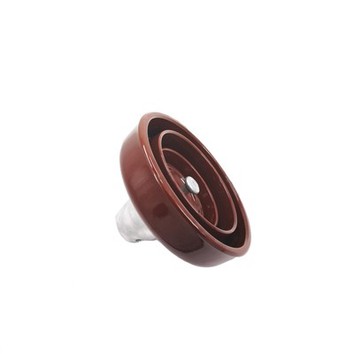


Environmentally friendly: Porcelain insulators are generally environment friendly. Thus when they are disposed of, they don't harm the environment. They are made of natural materials and can be safely dumped anywhere. The same can be easily recycled if you're using ceramic porcelain insulators.
High electrical strength: Compared to polymer, the electrical strength of the porcelain insulators is higher. Thus it is always advisable to use the same instead of polymer. Polymer insulators do not have a longer life. On the contrary, using porcelain is a better option as it helps to generate a good amount of lifeline.
Suitable for all temperature ranges: Ceramic insulators are suitable for extreme cold and hot temperatures. It is suitable for environments where dust and salt are high in the air. The insulators generally show a stable result for the same. Moreover, they are corrosion resistant and can be used for outdoor purposes. Porcelain insulators are a great option as they offer very high mechanical strength and are effective under pressure. You can also modify and customise the design to suit the applications. Moreover, porcelain insulators are aesthetically attractive.
What Are the Specifications of the Porcelain Insulator?
|
Name |
KV |
Creepage Distance |
|
Pin Insulator |
33 KV |
580 cd 5 collar / 580 cd 2 part |
|
Disc Insulators |
11 KV |
45 kn B & S / 45 kn T & C |
|
22 KV / 33 KV |
70 kn B & S / 70 kn T & C |
|
|
33 KV / 66 KV |
90 kn B & S / 90 kn T & C |
Types of High Voltage Insulators - Porcelain Insulator
Porcelain insulators
Ceramic or porcelain insulators are most commonly used on voltage lines from 11 kV to 400 kV. These insulators are made of fired clay and have high mechanical and dielectric strength.
01
Polymeric insulators
With the innovative polymer insulators, all the most demanding requirements are met by offering a wide range of products. The positive features of these solutions facilitate assembly and maintenance, save time and costs and add value to the product of the highest quality.
02
Glass insulators
Glass insulators are the oldest and most common insulators in transmission and distribution lines. These insulators are made of tempered glass and are used on voltage lines up to 33 kV.
03
Composite insulators
Composite insulators are made of glass fibre and epoxy resin. These insulators have high mechanical and dielectric strength and are used in voltage lines up to 800 kV.
04
Technical ceramics are used for high-quality tools in order to the following characterists:
Excellent electrical insulation, even in presence of high voltage, high mechanical resistance and hardness and excellent chemical resistance; to produce every ceramic article it's necessary to find the right material, that is the ceramic mixture with the best possible performances for each use. Especially, manufacturing porcelain insulators means to use high-quality raw materials such as kaolin, feldspar and quartz. Choosing the right porcelain insulator we can have products with high "dielectric strength" which means they are very resistent when subjected to high voltage difference without damages in order to the excellent performances of electrical insulator.
The porcelain is a very good insulating and for this it is used in order to isolate the electrical cables and wires but it is also have high mechanical strength and finally we must remember its pleasant look. The ceramic insulators can be used in all cases where it is necessary to create a wall-mounted electrical system through the use of braid cables and wall-mounted electrical wires. The wall mounted electrical system could be an option in response to architectural requirements due to the necessity to preserve the walls where the electrical system will be built.


The invention and use of polyethylene as an insulator material occurred in the mid-1960s. It was improved in years to follow as high-density polyethylene (HDPE) was developed. HDPE insulators accomplish the benefits of increasing chemical resistance, low temperature properties, impact and tensile strength, and scratch resistance during the molding process. In addition, there is virtually no chance of chipping, cracking or breaking.
Polyethylene insulator performance characteristics: Barring damage from misuse, vandalism or poor quality control, porcelain insulators can have an expected service life of 50 years or longer. But the issue with porcelain insulators is not longevity; it is compatibility with today's conductors. This is where HDPE insulators excel.
Which Are the Reasons of Failure of Porcelain Insulators?
Power industries are highly cautious regarding the aging assessment of transmission systems. The consistency and durability of insulators are extremely necessary for the efficient performance of power utilities. Despite insulators being only 5% of the capital cost, they require 70% of the maintenance costs of transmission lines.
The failure of porcelain insulators due to impulsive stresses caused by electrical, mechanical, thermal, and various environmental stresses. These stresses lead to the failure of the insulator, either mechanically or electrically. The failure probability is highly dependent on the mechanical and electrical characteristics of insulators, as mechanical and electrical properties are responsible for the strength of the insulator. The composition constituents of the porcelain body has a large impact on the mechanical and electrical characteristics of insulators.
The relation between the failure probability of insulators and the weight percentage of porcelain contents, such as SiO2, Al2O3, and Fe2O3, for the lifetime assessment of a porcelain insulator. The whenever porcelain insulators having SiO2 as the major component have been subjected for firing at higher temperatures, the corners of the quartz (SiO2) particles are dissolved into feldspar. Thus, this decreases the solid quartz (SiO2) content, leading to a degradation of mechanical strength. Therefore, the firing temperature has to be performed attentively in the case of porcelain insulators that have quartz (SiO2) as a major portion. However, another considerable issue with insulators having SiO2 as a major portion is the difference in the thermal coefficient of the quartz grain and matrix around it.
This condition leads to tensile stress in the quartz grains, and the surrounding matrix undergoes compressive stress. Thus, micro cracks are generated, which reduces the bulk density of the porcelain body of the insulators. However, in the case where SiO2 has been altered with Al2O3 in the porcelain body, the density of the fired porcelain body improves. At the same time, the replacement of SiO2 with Al2O3 to enhance the bending strength of electrical porcelain bodies. This improves the mechanical and electrical strength of the insulator. Furthermore, that Fe2O3 enhances the dielectric constant and loss tangent, which tends to result in an increase in heating through dielectric losses].
What Is the Temperature of Porcelain Insulator?
Porcelain insulators prepared from locally available ceramic materials, such as Hosaena clay, quartz, partially replaced feldspar by cullet. The physical and electrical properties, such as water absorption, apparent porosity, bulk density, linear shrinkage, and dielectric strength as a function of firing temperature, were evaluated.
The primary & secondary mullite and glassy phases were grown early at a firing temperature of 1150 and 1200 °C, due to the partial replacement of feldspar by cullet. The porcelain insulator prepared from the composition of 45%clay, 35%feldspar, 10%quartz and 10%cullet and fired at 1200 °C showed dielectric strength 8.9kv/mm, water absorption (0.459%), apparent porosity (1.530%), bulk density (4.29 g/cm3), and linear shrinkage (4.18%).
What Is the Insulation Resistance of the Porcelain Insulator?
Porcelain consists of a glassy phase (matrix) and some crystalline phases which are dispersed/embedded in it. Mullite and quartz are very frequently found In the porcelain body. Cristobalite is also detected in porcelain which had been subjected to prolonged heating. Concentrations of phases changed as well as new phases appeared due to longtime use of porcelain body at elevated temperature. Apart from this, significant variations in size, shape and distribution of the phases in porcelain resulted during continuous high temperature applications.
Porcelain is basically an insulator and its electrical resistivity at room temperature is about 1014 ohm-cm but it drops with the rise in temperature. Each phase in the porcelain body has its specific influence on the resistivity shown by the body depending on its concentration and microstructural attributes. Temperature also plays an important role to control the nature of certain phases. Structural characteristics of some of the phases are also responsible for change in the resistivity of porcelain body.
The phase composition including the phase concentration and the microstructure of porcelain can be changed by incorporating different mineralizers in the body. Besides, a novel method to bring about such change in composition, concentration and microstructure of the phases in porcelain is the heat-treatment of the body under certain controlled conditions to recrystallise its glassy phase.
What Is the Strength of Porcelain Insulator?
The most commonly used material for insulators of overhead line is porcelain but glass, steatite, and special composition materials are also used to a limited extent.
Porcelain is produced by firing at a high temperature a mixture of kaolin, feldspar, and quartz.
It is stronger mechanically than qlass, gives less trouble from leakage and is less affected bv changes in temperature.
The materials used for porcelain are silica 20%, feldspar 30%, and clay 50%. Porcelain has a dielectric strenath of about 410 kV/mm.
Glass has hiqher dielectric strenath, but it attracts condensation and the thick firreqular shapes needed for insulators are difficult to cast without internal strains.
So that manufacturers stop making glass insulators and switching to ceramic materials.
How to Test Porcelain Insulator?
A number of tests are designed to evaluate the electromechanical integrity of the insulator samples removed from a transmission line section. These tests include:
· Megger and three AC dry flashover tests
· Combined mechanical and electrical strength tests
· Steep front-of-wave tests
· Contamination tests
· Porosity tests
· Thermo-mechanical performance test

Where Are Porcelain Insulators Used?
Porcelain insulators are widely used in electrical applications for power transmission. These insulators aim to keep the electricity distribution lines insulated and help distribute the electricity throughout the systems. Porcelain doesn't conduct electricity. Hence when the same is being combined with other non-conductive materials, they seem to be ideal for the insulators. Generally, ceramic porcelain is used for electrical insulators.
Porcelain insulator manufacturers focus on manufacturing the best quality insulators with high mechanical strength and good electrical stability. These insulators are also corrosion resistant and can be effectively used in harsh environments.

International Co.,Limited was established in 1996 which focuses on electric products, marketing, services and logistics. It is an important manufacturer and export trader with several decades of experience in designing, researching, manufacturing, testing and logistics. TCI, located in , with the largest port in North-East of China, has strong capacity of technological research and development.
More than 70% of TCI's staff has bachelor degrees or higher. Many senior engineers and technicians are knowledgeable and experienced in the fields of high voltage, macromolecule research and machine manufacturing. We also have a well-established skilled workforce. We have a long-time close relationship with the China Electric Power Research Institute, CESI, all supporting our technological research and development.
We implement the ISO 9001:2015 Quality Control and the ISO14001:2015 environmental management systems. TCI's experience in this competitive market has formulated a well regulated management style for product sales, quality and services.
Ultimate FAQ Guide to Porcelain Insulator
As one of the most professional porcelain insulator manufacturers and suppliers in China, we're featured by quality products and good service. Please rest assured to buy customized porcelain insulator made in China here from our factory.