

International Co.,Ltd. (TCI) specializes in manufacturing and exporting insulators, power fittings, bushings, cables and accessories for power transmission lines and substations. In addition to supplying high-quality products to our customers, we also provide superior technical assistance and services to meet their various needs.


Why Choose Us
Rich Experience
More than 70% of TCI's staff has bachelor degrees or higher. Many senior engineers and technicians are knowledgeable and experienced in the fields of high voltage, macromolecule research and machine manufacturing. We also have a well-established skilled workforce.
Professional Team
We has the complete management and technology teams, modern office facilities and business management software guaranteeing our clients secure operation solutions and sustainable business models.
Our Certifications
We implement the ISO 9001:2015 Quality Control and the ISO14001:2015 environmental management systems.
Our Market
TCI's products have been exported to 100 countries in the world. Our high quality products and services have helped us to obtain overseas market share and good reputation.
Overview of Composite Railway Insulator
The Railway Insulator is the crucial component in the electrification of railway systems, primarily designed to provide electrical insulation and mechanical support within the railway's overhead contact system and track circuit system. These insulators ensure the safe and stable transmission of electricity necessary for powering electric trains while protecting the infrastructure from electrical faults and environmental influences. It is typically made from materials like porcelain or advanced composites. Traditional porcelain insulators offer strong mechanical and electrical insulating properties.
We offer the following Product Specifications
|
Product Type |
FQXG-25/(100/120) |
FOXG-25/(160/200) |
|
Specified Voltage |
25 kV |
25 kV |
|
Specified Mechanical Tensile Failing Load |
100/120 kN |
160/200 kN |
|
Section Length |
800 |
850 |
|
Min Insulation Distance |
≥600 mm |
≥600 mm |
|
Min nominal Creepage Distance |
1600 mm |
1600 mm |
|
Lightning Impulse Withstand Voltage(Peak Value) |
310 kV |
310 kV |
|
Artificial Pollution Power Frequency Withstand Voltage (Salt Deposit Density) |
36 kV |
36 kV |
|
Power Frequency Withstand Voltage Test-Wet |
150 kV |
150 kV |
As compared to the porcelain insulators, the polymer ones are not brittle. This reduces your requirement of spare – parts of the insulators to a great extent, thus reducing running cost.
The polymer insulators, as compared to the porcelain ones are easy to carry due to their much lower weight. The transportation cost and the risks of transit time damage are also minimized.
With the silicon insulators, there is absolutely no necessity for zero – value checking.
The maintenance cost of polymer insulators is a minimum, as you do not need to clean them very often. The hazards of maintenance being the minimum, you can easily consider using them in areas, which are extremely difficult to maintain.
The polymer insulators have proved to be extremely anti-pollutant. They can be used very well in highly polluted locations.
The polymer ones come with high mechanical strength, while the same cannot be guaranteed about the porcelain insulators, which are essentially breakable.

Application of Composite Railway Insulator
Overhead Catenary Systems:
One of the primary applications of railway insulators is in overhead catenary systems. These systems consist of overhead wires that supply electrical power to trains through pantographs mounted on their roofs. Insulators are used to support these wires and provide electrical insulation, preventing leakage of current to the supporting structures or the ground. By maintaining the integrity of the electrical circuit, insulators ensure the safe and efficient transmission of power to trains, enabling them to operate smoothly and reliably.
Railway Signaling Systems:
Railway signaling systems are crucial for ensuring the safe and orderly movement of trains on railway tracks. These systems use electrical signals to control train movements, including signaling for track switches, level crossings, and speed restrictions. Insulators play a vital role in these systems by providing insulation between electrical conductors, preventing interference and ensuring the reliable transmission of signals. By maintaining the integrity of signaling circuits, insulators help prevent signal failures and reduce the risk of accidents on railway tracks.
Substation Equipment:
Railway substations are essential facilities that transform and distribute electrical power to various components of the railway system, including overhead catenary systems and signaling equipment. Insulators are used in substation equipment such as circuit breakers, transformers, and busbars to provide insulation and support. By isolating electrical components from the ground and other conductive structures, insulators prevent electrical faults and ensure the safe and efficient operation of substation equipment.
Electrification of Railway Lines:
Electrification of railway lines is an important initiative aimed at reducing dependence on fossil fuels and improving the environmental sustainability of railway operations. Insulators play a critical role in electrification projects by supporting overhead wires and providing insulation between conductors and supporting structures. Whether it's a high-speed electrified railway or a metro system, insulators are essential for ensuring the safe and efficient transmission of electrical power to trains.
Maintenance of Railway Infrastructure:
Insulators also play a role in the maintenance of railway infrastructure by providing electrical isolation during maintenance activities. For example, when railway tracks or overhead wires need to be repaired or replaced, insulators help isolate the affected section from the rest of the railway system, allowing maintenance crews to work safely without risking electrical hazards.
Install of Composite Railway Insulator
When the Composite Post Insulator with the base is installed, the base and insulator are bolted together with bolts firstly and then fixed integrally on the mounting rack.
Before installation, the goods should stored in dry warehouse. It should not expose to oil and petrifaction products, and should take actions to keep away from rats.
During transportation, hardware fittings and other heavy objects shouldn't be stacked on the insulators directly to avoid damaging the insulator's sheath. So it should be unpacked only at the installation site.
Be careful and avoid edge tools cutting the insulator's sheds when unpacking the Box.
Don't drag the insulators on the ground.
Be careful not to bend the insulator too much, which avoid the excessive bending stress of insulators' rod.
The rope should be attached to the end-fitting rather than hang it on the insulator's sheds directly when in hanging installation.
Don't treading and climbing on insulators.
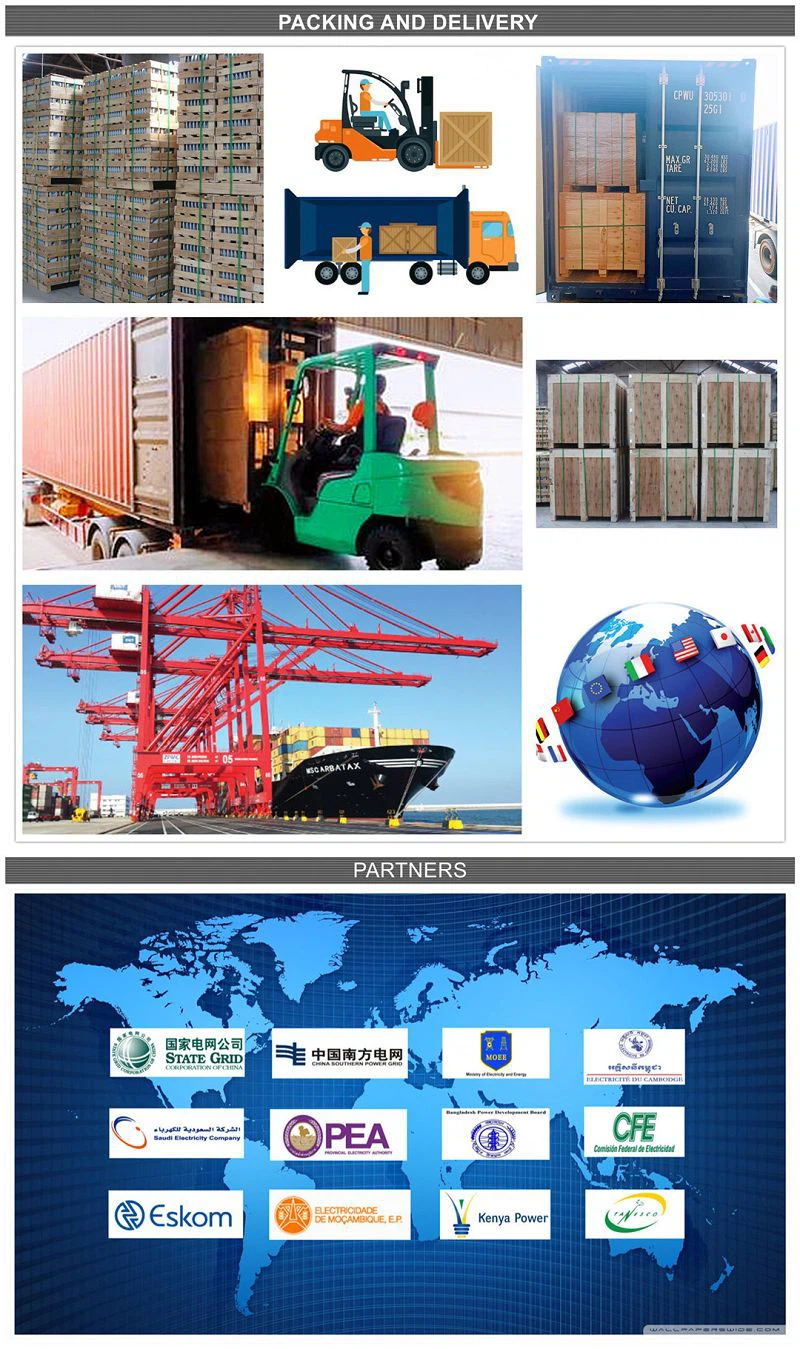
Packaging & Delivery
Certifications

FAQ
As one of the most professional composite railway insulator manufacturers and suppliers in China, we're featured by quality products and good service. Please rest assured to buy customized composite railway insulator made in China here from our factory.
Composite Railway Insulator, Composite Tension Insulator For Railway, Polymer Insulator For Railway