

Why Choose Us?
Advanced Equipment
Our Factory is well equipped with all worldclass facilities, such as programmable tensile load testers, crimping systems with acoustic emission detectors, fully automated rubber injection moulding machines, vulcanization testers, a complete set of power frequency transformers and impulse voltage generators.
Wide Product Range
Main products include composite insulators for electric power lines from 10 to 800kV, composite insulators for electric railways, phase spacers, disconnecting switches, bushings, surge arrestors, etc. Our products have a good reputation in international markets.
Complete Qualifications
We implemented the ISO 9001:2015 Quality Control and the ISO14001:2015 environmental management systems. DCI's management and comprehensiv ecompetitiveness, quality of products and services, benefited enormously.
Broad Market
DCI's products have been exported to Europe, America, Oceania, Africa and Asia. We also have long-term cooperation with a lot of large international electricity companies like TYCO, ABB, AREVA, ALSTOM, PLP, Victor, EB, NTP and Siemens.
Porcelain disc insulators are typically used in power transmission line. Porcelain is the most commonly used insulating material until now. Not only any voltage but also any contamination level can be done by changing number of insulators.


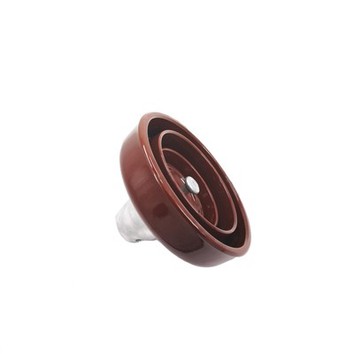
Benefits of Using Porcelain Disc Insulator
A porcelain disc insulator is an electrical device, used to provide the insulation among the line conductor & earth to stop the leakage current. So insulating material plays an essential role while making different circuits & power systems. It gives high resistance so that the electrical current doesn't supply from one place to another. There are different types of insulators are used in transmission & distribution systems like pin, strain, shackle, post, stay and disc insulator.
• High resistivity.
• Mechanical strength should be good for the conductor load.
• Dielectric strength is good.
• For insulation material, its relative permittivity is high.
• It uses materials like non-porous or waterproof.
• Wire Support
Ceramic insulators are commonly employed to hold wires on utility and telephone poles. These insulators often feature an umbrella-like shape that shields the wires and the lower portion of the insulator from precipitation such as rain or snow. Known for their durability and weather resistance, ceramic wire support insulators are among the earliest designs and have been used for many years due to their robust performance in harsh environmental conditions.
• Mechanical Tension
Mechanical tension ceramic insulators are specifically engineered for environments where wires or cables exert pulling forces on the insulator. Similar to support insulators, they are used with overhead wiring, radio antennas, and power lines. These insulators can be positioned between two power lines to ensure proper separation. Mechanical tension ceramic insulators are ideal for keeping wires aligned and under tension, ensuring they remain straight and secure.
• Pole
Pole ceramic insulators consist of a spool insulator mounted on a bracket, with a small rod passing through the center of the insulator to connect its top and bottom. These insulators are secured to walls, poles, or other surfaces using a bolt located in the center of the bracket. They are designed to accommodate changes in the angle of the connecting line, allowing them to adjust and adapt accordingly.
• Safety
Insulators primarily serve to regulate the flow of electrical current and prevent it from grounding. Safety ceramic insulators play a crucial role by remaining in place and providing insulation if wires become severed and fall. They are strategically installed to ensure that the wires do not come into contact with the ground. The configuration of safety ceramic insulators can vary based on the specific requirements of the application.
In the event of a pole falling, the ceramic insulator helps ensure that the lower portion of the system remains de-energized, preventing any voltage from being present.
• Low Voltage Distribution
Low voltage distribution ceramic insulators are mounted either vertically or horizontally, typically secured with a bolt or attached to a cross arm. Their design often resembles that of pole ceramic insulators. These insulators are employed in overhead lines handling medium to low voltage levels.
The extensive use of low voltage distribution ceramic insulators is attributed to their dependable performance and reliability.
• Spark Plugs
Ceramic insulators in spark plugs are designed to channel the high voltage needed to create a spark across the gap, which ignites the fuel-air mixture. These insulators ensure that the electrical current travels from one end of the spark plug to the other without causing flashover to the surrounding components. The choice of ceramic materials for spark plugs is due to their high melting point and minimal thermal expansion, which are crucial for reliable performance under extreme conditions.
• Heat Applications
Ceramic insulators are widely used in applications where there is high heat. They support heating elements in ovens, heaters, and furnaces. Ceramic's resistance to abrasion and long life and its ability to hold its shape and size under pressure makes it the perfect insulation material for heated applications.
Ceramic insulators are commonly used in heaters to support and electrically isolate the heating elements.
• Sleeve Washers
Electrical insulating ceramic sleeve washers, sometimes referred to as shoulder or insulating washers, are designed to block electrical current and prevent galvanic corrosion. They share many of the advantageous properties of standard ceramic insulators and can endure temperatures up to 3000°F. Additionally, their specialized design allows them to resist exposure to hydrochloric and nitric acid gases.
Raw Material
The raw materials for the manufacture of ceramics cover a wide range of diverse and unique compounds because there are so many different applications for ceramics. For example, the production of insulators for high temperature and advanced electronics applications includes materials that contain carbon, nitrogen, silica, and sulfur.
Compression
The compression process for manufacturing ceramic insulators can be either dry or wet forming. Dry forming is typically used for simpler shapes, where powdered material is placed into a flexible mold and compacted by applying pressure to achieve the desired shape. In contrast, wet forming involves methods such as extrusion or casting, where the material is dampened to facilitate shaping.


Glazing
Depending on the manufacturer and the intended use of the ceramic insulator, glazes may be applied to the compressed component. These glazes provide additional protection and enhance the longevity of the insulator. Various types of glazes, tested for durability and strength, can be used to meet specific performance requirements.
Firing
The firing or drying stage is a crucial phase in the manufacturing process, integral to the design and engineering of the ceramic component. Engineers account for potential shrinkage during firing, which can affect the final dimensions. During this process, the glaze is baked onto the surface of the component and hardened. Firing typically occurs at temperatures ranging from 2850°F to 3100°F (1570°C to 1704°C). The shrinkage factor is generally estimated at around 20%.
Machining
The machining process refines the ceramic component to meet precise tolerance and design specifications. After firing, the ceramic material becomes very hard, necessitating the use of diamond-tipped cutting tools for shaping. The extent of machining required varies depending on the type of component. Tolerances are set according to the standards needed for the specific electrical application in which the component will be used.
Types of Porcelain Disc Insulators
There are two main categories of disc insulators based on their application:
Suspension Type Insulators
Suspension-type insulators are used to suspend the conductor from the tower or pole. They are designed to primarily support the weight of the conductor and any wind or ice loads acting vertically downwards. These insulators are hung vertically and carry the conductor’s weight through the metal fittings at the end of the insulator string.
Strain Type Insulators
Strain-type insulators, also known as dead-end or tension insulators, are used at termination points or corners where the conductor changes direction. They are designed to withstand the tensile forces acting along the length of the conductor. Strain insulators are mounted horizontally or at an angle, and the conductor is attached at each end of the insulator string, anchoring it to the tower or pole.
Thermal Performance
• Porcelain: Exhibits good thermal stability and can handle high temperatures.
• Epoxy: Shows good thermal performance but may have limitations compared to porcelain.
Moisture Resistance
• Porcelain: Highly moisture-resistant and suitable for outdoor applications.
• Epoxy: Generally, moisture-resistant, but long-term exposure to moisture might impact its properties. For switchgear installed indoors, or in outdoor enclosures where the temperature, moisture and other climate factors are controlled, it provides excellent performance.
Environmental Resistance
• Porcelain: Resistant to UV radiation, chemical exposure, and environmental pollutants.
• Epoxy: It is more resistant against ultraviolet light, chemical exposure, and environmental pollutants.
Weight
• Porcelain: Heavier compared to epoxy.
• Epoxy: Relatively lightweight compared to porcelain materials. Epoxy makes up less than 70% of the weight of porcelain.
Manufacturing Flexibility
• Porcelain: More complex and labor-intensive manufacturing process.
• Epoxy: Offers greater flexibility in shape and design due to its molding capabilities. Epoxy is easier to manage in terms of dimension and shape than porcelain.
How to Choose the Best Porcelain Disc Insulators?
Selecting the right disc insulator is crucial for ensuring the safety and reliability of electrical systems. With various options available in the market, it's important to make an informed decision.
Understand the Voltage Requirements
One of the primary considerations when choosing a disc insulator is the voltage rating. Determine the voltage level of your electrical system and select a disc insulator that meets or exceeds that rating. Different insulator designs and materials are available for various voltage ranges, ensuring proper electrical insulation and performance.
Evaluate Environmental Conditions
Consider the environmental conditions in which the disc insulator will be installed. Factors such as temperature variations, pollution levels, humidity, and exposure to UV radiation should be taken into account. Choose an insulator that is specifically designed to withstand these conditions and has a proven track record of performance in similar environments.
Material Selection
Porcelain disc insulators are available in different materials, such as porcelain and polymer. Consider the advantages and limitations of each material. Porcelain insulators are known for their excellent mechanical strength and high resistance to pollution, making them suitable for harsh environments. Polymer insulators, on the other hand, offer lightweight construction, resistance to vandalism, and ease of handling. Select the material that best aligns with your application requirements.
Consider Mechanical Strength
Mechanical strength is crucial, especially in areas prone to high wind speeds, ice, or other external stresses. Evaluate the mechanical strength of the disc insulator, ensuring it can withstand the expected mechanical loads without failure. This is particularly important in overhead transmission lines and areas with high mechanical stress.
Check Quality Standards
Ensure that the disc insulator you choose complies with relevant quality standards and regulations. Look for insulators that have been tested and certified by reputable organizations. Quality standards ensure that the insulator meets performance requirements and has undergone rigorous testing for electrical and mechanical performance.
International Co.,Limited was established in 1996 which focuses on electric products, marketing, services and logistics. It is an important manufacturer and export trader with several decades of experience in designing, researching, manufacturing, testing and logistics. TCI, located in , with the largest port in North-East of China, has strong capacity of technological research and development.
More than 70% of TCI's staff has bachelor degrees or higher. Many senior engineers and technicians are knowledgeable and experienced in the fields of high voltage, macromolecule research and machine manufacturing. We also have a well-established skilled workforce. We have a long-time close relationship with the China Electric Power Research Institute, CESI, all supporting our technological research and development.
We implement the ISO 9001:2015 Quality Control and the ISO14001:2015 environmental management systems. TCI's experience in this competitive market has formulated a well regulated management style for product sales, quality and services.


Ultimate FAQ Guide to Porcelain Disc Insulator
As one of the most professional porcelain disc insulator manufacturers and suppliers in China, we're featured by quality products and good service. Please rest assured to buy customized porcelain disc insulator made in China here from our factory.
polymer Hybrid Insulator, Bell Type Suspension Insulator, Disc Suspension Porcelain Insulators